About
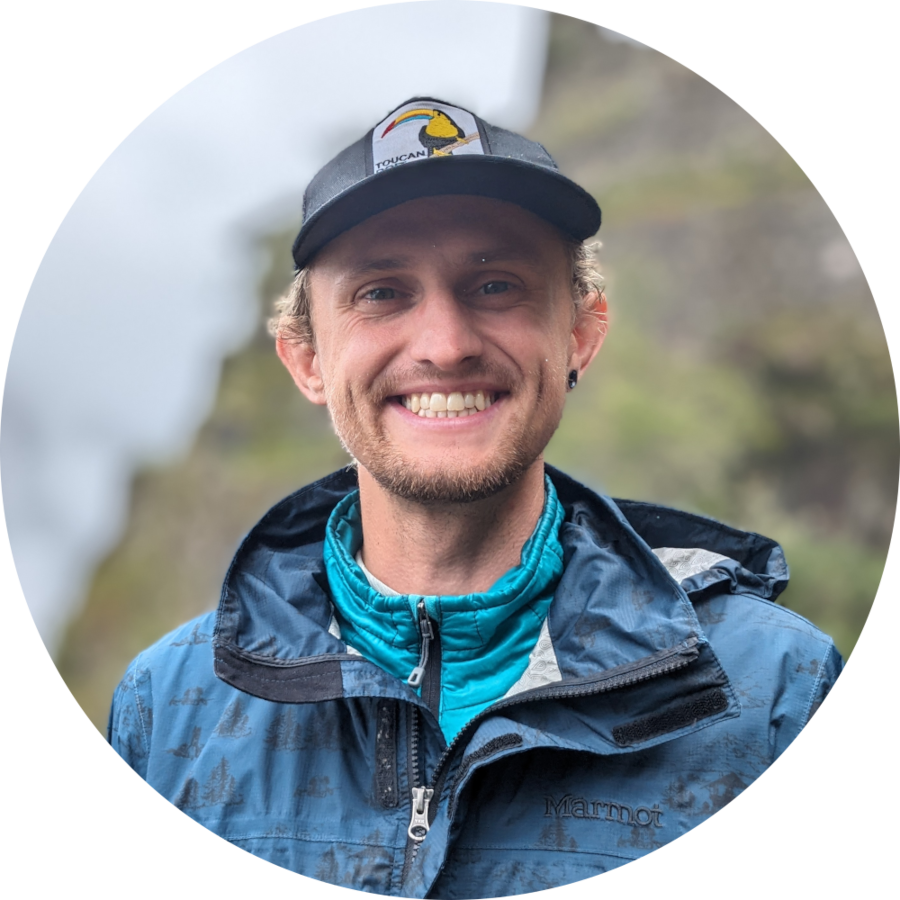
My career as a scientist was launched into motion at my 5th birthday when I received my first lab coat. After studying Biochemistry and Molecular Biology at UC Santa Barbara and working as an EMT, I discovered that my highest priority is preserving the environment on our planet and that microbes will be key to this goal.
My path has taken me from biotech startups to research labs at top universities, to earning an M.Sc. in Genome Science and Technology at UBC. My thesis work, which uncovered the hidden metabolic roles of rare microorganisms in anaerobic communities, was published in Nature Microbiology in 2025.
I now work as a bioinformatics consultant at Koonkie, building computational pipelines and tools for processing large-scale microbiome datasets.
My pronouns are he/him
The journey so far
B.Sc. Biochemistry & Molecular Biology
Research associate at an early-stage immunology startup
Focus on automation and scale-up of bacterial culturing and serum screening
Lab manager & research associate in Adam Arkin's Lab
Focus on microbial biotechnology for life support in deep space at CUBES
M.Sc. Genome Science & Technology
Advised by Profs. Ryan Ziels and Steven Hallam
Focus on metaproteomics of anaerobic microbial communities
Continuing M.Sc. thesis work in Ryan Ziels' Lab
Focus on microbial bioinformatics and data presentation
Bioinformatician at a bespoke consulting firm
Focus on microbiome and biodiverisity data analysis and building computational pipelines
Outside of the lab or away from the computer, I am eager to get outside. It is our beautiful planet that inspires my work, after all. British Columbia is a playground and I split my time between backpacking, skiing, surfing, kitesurfing, bike touring, tie-dyeing, and laying motionless on the beach.